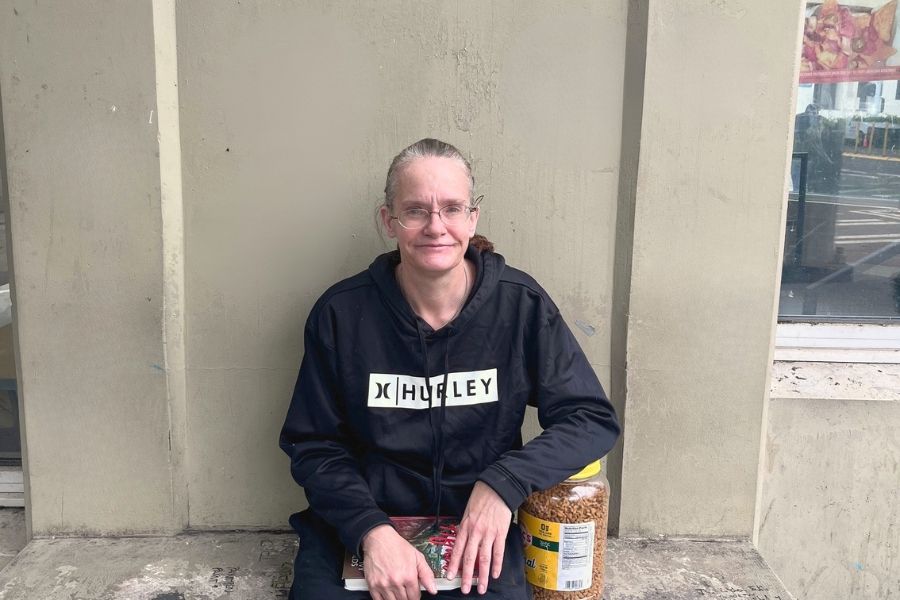
Carmen L. outside her Plymouth apartment building
Not too long ago, Carmen L. had left an abusive partner and was sleeping under an overpass in Kent with nothing but a blanket, trying to keep herself and her cat warm. When it rained, it could take half a day just to get her fire going.
Carmen lived outside for six years before entering a shelter in Seattle and securing permanent housing at Plymouth Housing in 2024. Now, she has a safe place to call home and the stability to focus on her future.
“I finally have a home. I’ve earned it and I’ve waited a long time for it,” she said.
It wasn’t an easy road. Carmen deals with severe anxiety and depression and struggled with substance abuse for many years. With a stable place to live, a reliable case manager, supportive staff, and helpful neighbors, she could begin focusing on her health and recovery.
Today, Carmen has been substance free for a year and four months, and hasn’t used alcohol in three years, an achievement 20 years in the making.
“Today I am the best version of myself I’ve been,” she said. “I love my life and I love myself.”
Recovery through support and community
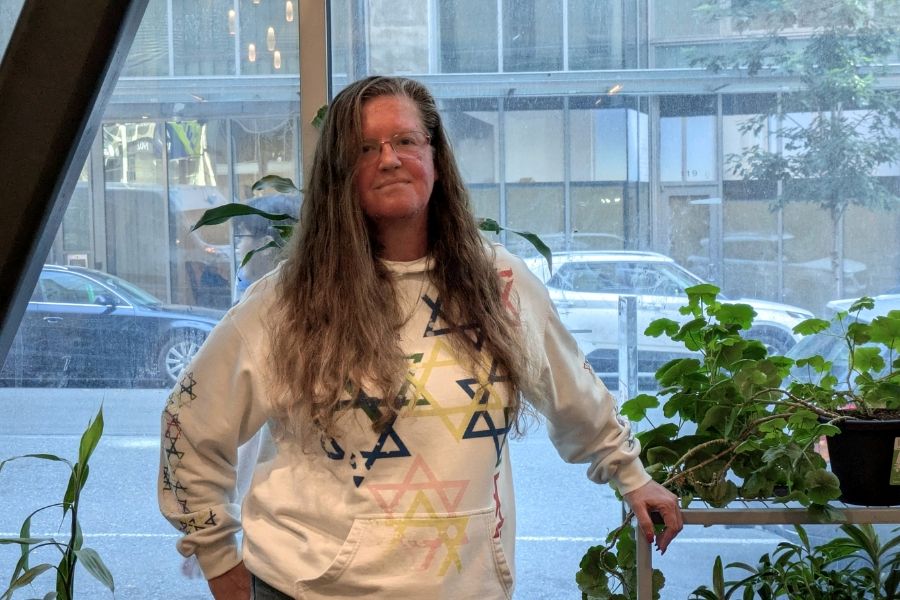
Angela Regan inside a Plymouth apartment lobby
Carmen lives in a Plymouth apartment in Belltown with her cats Sebastian, Lucy, and Petunia May. She credits her first case manager at Plymouth, Angela Regan, with playing an immense role in her recovery journey.
If Carmen was isolating herself, Angela would knock on her door. They spent hours talking about Carmen’s progress and Angela’s own experience recovering from substance use.
“Angela’s a big reason I found myself again. She’s the reason every day that I didn’t give up – one of the most amazing human beings I’ve ever met in my life,” Carmen said. “She knew me when I didn’t know myself.”
As Carmen worked toward sobriety, she developed a simple ritual. Every day, she placed a sticker on her door to mark another day she hadn’t used drugs. Over time, the stickers began to add up.
She noticed Angela keeping track, too. “I wasn’t the only one counting the stickers. It reminded me how far I’d already made it.”
For Carmen, recovery wasn’t something she had to navigate alone. She remembers a time when Plymouth staff sat with her for half an hour during a relapse crisis, helping her regain her footing.
“They work as a family, and you just know there’s always somebody there for you. Somebody to listen without judgment,” Carmen said.
Come as you are
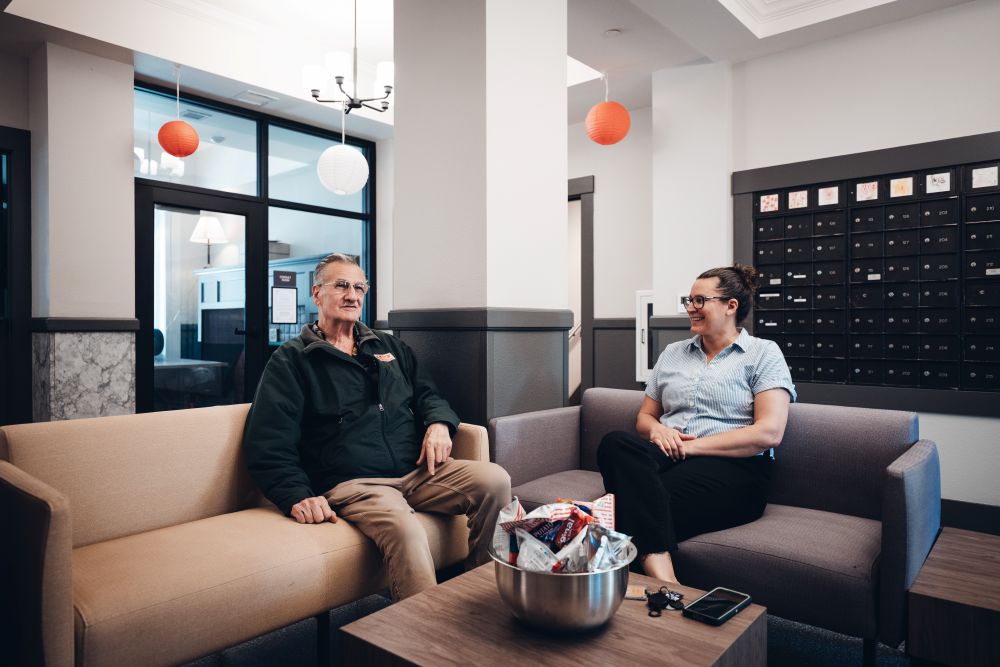
A Plymouth resident, left, speaks with staff in a common area
Many Plymouth residents are working toward recovery in different ways. Some attend daily outpatient rehabilitation programs with support from their case managers. Others participate in Contingency Management, a program that uses gift cards to reward progress toward recovery goals.
Others, like Carmen, benefit from counseling, recovery meetings led by peer support specialists, and connections to organizations like Recovery Café and Peer Seattle.
One of those recovery meetings at Plymouth created a ripple effect. When Carmen shared her sobriety journey, another resident, Chris J., heard her story and thought, “If she can do it, I can do it.” And he did: Chris has now been sober for 14 months.
For Carmen, one of the most important parts of her journey was knowing she would not be judged for where she was starting. She said Plymouth’s “come as you are” approach gave her the grace to move at her own pace.
Knowing she was welcome from the beginning, even while she was still using, made all the difference.
Carmen’s advice for people who care
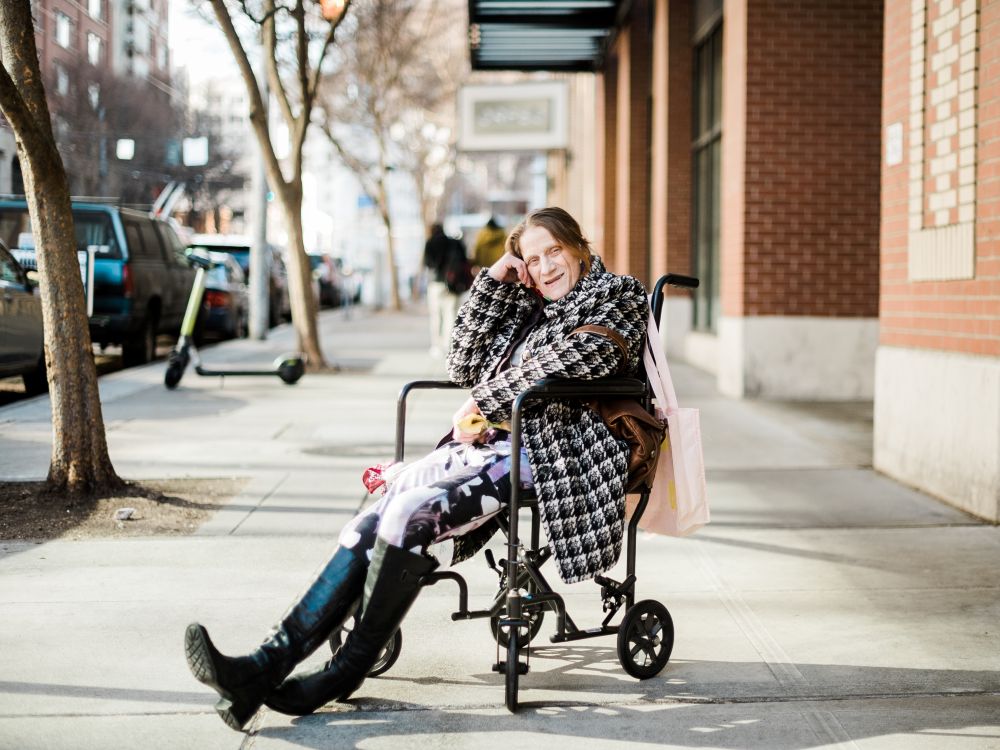
A Plymouth resident outside her apartment building in Seattle
Today, Carmen pays it forward. She regularly brings meals to unhoused neighbors and checks on them. Having experienced homelessness herself, she understands how much it means to be seen and considered part of the community.
“It’s not the way people look at you that hurts the most; it’s the way they don’t look at you.”
Carmen encourages people to notice their unhoused neighbors on the sidewalk – really notice them. A simple acknowledgment can remind someone that they matter and that they’re not alone. “Never underestimate a random act of kindness,” she said. “It could save someone’s life.”
Carmen also wants people to understand that people living in supportive housing or still unhoused have often already overcome enormous challenges, even if that progress isn’t always visible from the outside, and even if they still struggle with active substance use. Recovery and stability happen one step at a time.
“Even when I was using, I took care of myself, my home, and my pets,” Carmen said.
Her message is simple: People who are unhoused or use drugs deserve dignity and respect, just like everyone else.