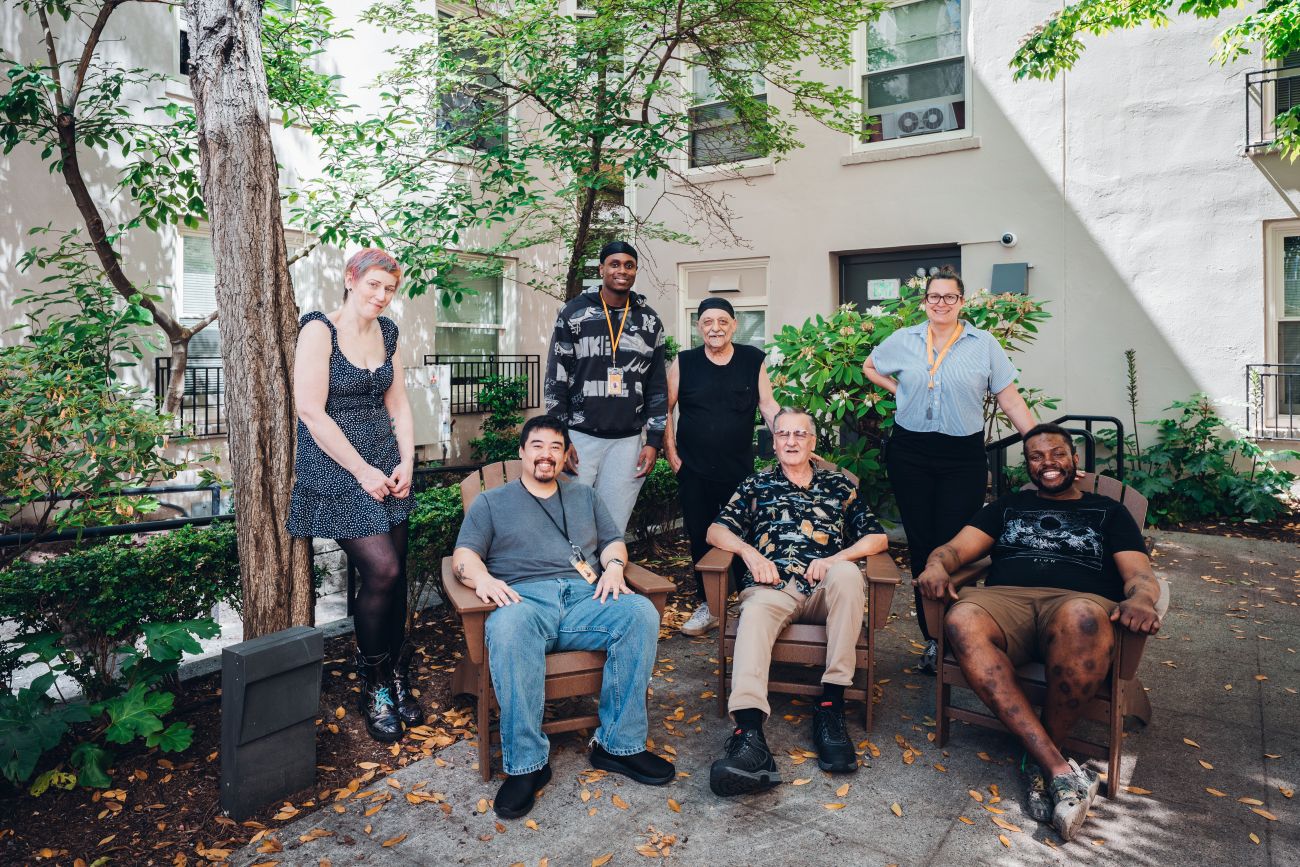
Residents and staff at a Plymouth building in downtown Seattle
“If you told me I had to be sober to go to a shelter or get into housing, I would’ve turned it down. I would’ve lived in my tent and probably died there.”
This is a reflection from Chris J., who lives at a Plymouth building in Seattle. Years ago, Chris entered sober housing, relapsed on day one, and immediately lost his place.
When Chris arrived at Plymouth, staff met him where he was. With a private apartment and consistent check-ins, he finally had the stability to focus on sobriety. His case manager helped him enroll in substance use treatment and supported him in attending five days a week.
Now, Chris has been sober for eleven months. He attends daily recovery meetings, cares for a new puppy, and gives back to the community by helping folks with mobility issues. His case manager said he gets along with everyone. Chris owes his success to long-term housing with integrated support.
What causes substance use?

A resident accesses groceries at a downtown Seattle Plymouth building
For people without stable housing, safety, supportive relationships, or access to care, substance use can be a way to survive impossible circumstances. In the context of instability, trauma, and unmet needs, it can be a rational, adaptive, protective human response.
Substance use is often a result of homelessness, not the cause. Unhoused people might use addictive substances to ease pain, manage fears, and generally cope with the demands of living without a permanent home — like needing to stay awake all night to protect their space and belongings.
If this is hard to come to terms with, it’s worth pausing to ask: what would I do in the same situation as…?
- A woman alone on the street at night, taking something to stay alert
- A veteran with no therapist or treatment, using the only relief available to them
- An elder discharged from the hospital back to the street, with no other way to manage pain or follow-up care
- A teenager who never had belonging or stability, finally finding community in a group that uses substances together
Five important realities
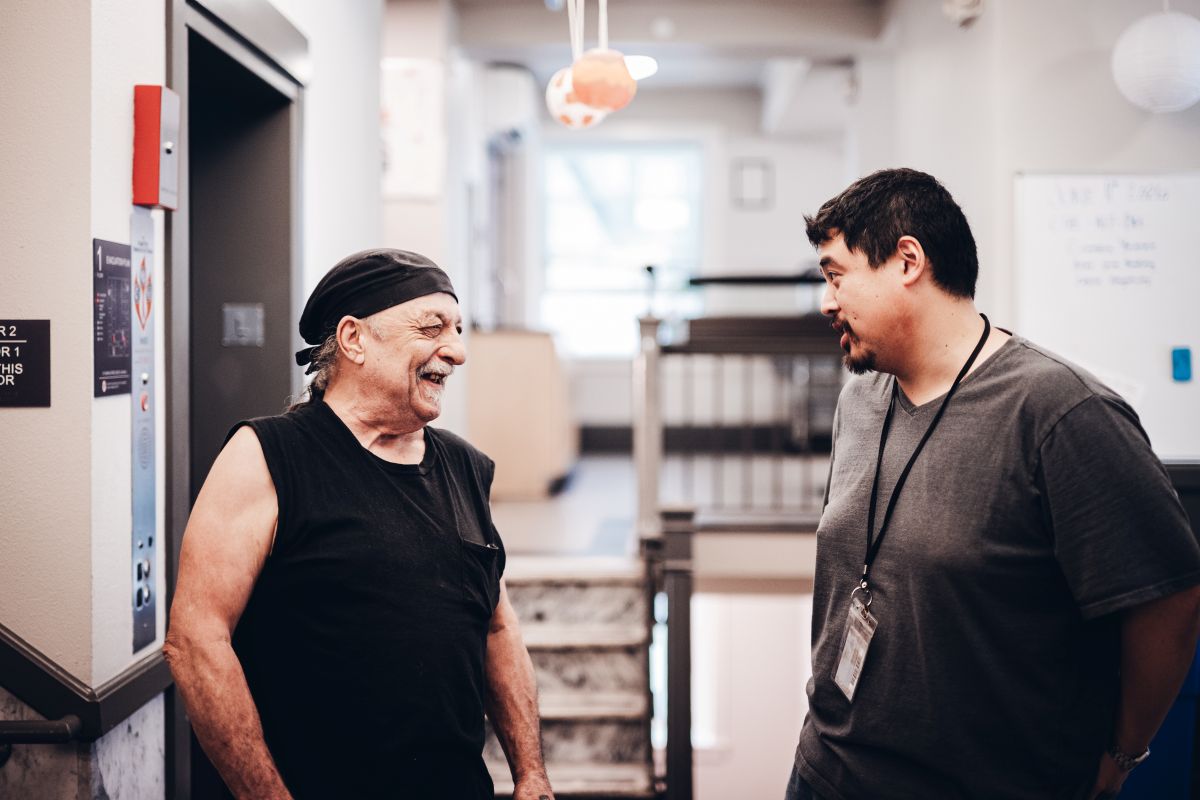
Plymouth staff Andy shares a hallway check-in with resident Samuel, left
Since 1980, Plymouth has provided housing and life-saving support to people experiencing homelessness. While much has changed over the decades, one thing hasn’t: public scrutiny around residents’ substance use. Here are five reasons why Plymouth houses people who use substances:
1. Everyone deserves a home.
At Plymouth, we believe that everyone deserves a home, including folks who are struggling with active substance use.
Addiction is an illness. It affects a person’s brain and behavior, leading to an inability to control the use of a substance despite the harm it causes. When people are dealing with a chronic health condition that upends their lives, they need stability and support. Housing with health and individualized services offers that.
2. Our model offers housing plus support.
Some believe that housing advocates want to place people in homes without the support they need. But our model isn’t housing only. Plymouth buildings are staffed 24/7 by people who know residents by name and help them navigate daily needs and long-term goals.
Every resident has a dedicated case manager — a consistent, trusted partner who helps them access healthcare, maintain appointments, pursue substance use treatment, and secure benefits and meals. Staff also support residents in reconnecting with family, seeking employment, and exploring meaningful activities.
There are many ways Plymouth supports residents in their recovery journeys. Beyond reliable support from case managers, individuals receive 1:1 counseling from peer support specialists and can participate in recovery-focused groups. Plymouth’s Bellevue building offers Contingency Management, a voluntary, proven program that provides rewards for abstaining from substance use. Residents can also opt into our sobriety-intended building in Seattle that offers more intensive recovery support.
3. Reducing harm is a lifeline.
We can’t make drug use disappear, but we can equip people with tools to protect themselves and their neighbors. Plymouth aims to minimize the harmful effects of drug use rather than simply condemn them.
At our buildings we provide access to the overdose reversal medication Naloxone, fentanyl test strips, and training on how to recognize and respond to overdoses. These tools save lives.
This approach does not “enable” drug use. It provides the conditions people need to make safer choices. The alternative — withholding housing or support until someone stops using drugs — often pushes people further into instability and increases their risk of overdose and death.
4. People are more likely to engage in substance use treatment when their housing is stable.
Expecting someone to stop using substances or fully comply with treatment while living in crisis or unstable conditions is a near-impossible demand. Recovery is hard enough for people who are housed; it becomes even harder when someone is also navigating the trauma and daily instability of homelessness.
“Sobriety first” or “compliance first” programs succeed for some, and we celebrate those successes. People should have many pathways available to them. But for many residents, like Chris, those approaches can lead to repeated relapses, dropouts, and returning to the street.
When people know their housing is not constantly at risk, they are often more willing to accept help and begin working toward recovery goals.
5. Our residents deserve privacy, just like anyone else.
Drug use happens across all communities, housing types, and income levels — it is not unique to people who experienced homelessness or live in supportive housing. Like anyone who rents their home, Plymouth residents pay rent, have legal rights as tenants, and deserve the autonomy to make decisions about their own lives within their private apartments.
That does not mean Plymouth encourages drug use. Our aim is to keep people housed, reduce the risk of overdose and other harms, and build relationships rooted in trust and accountability. This way, residents are more likely to engage in treatment and recovery services when they are ready.