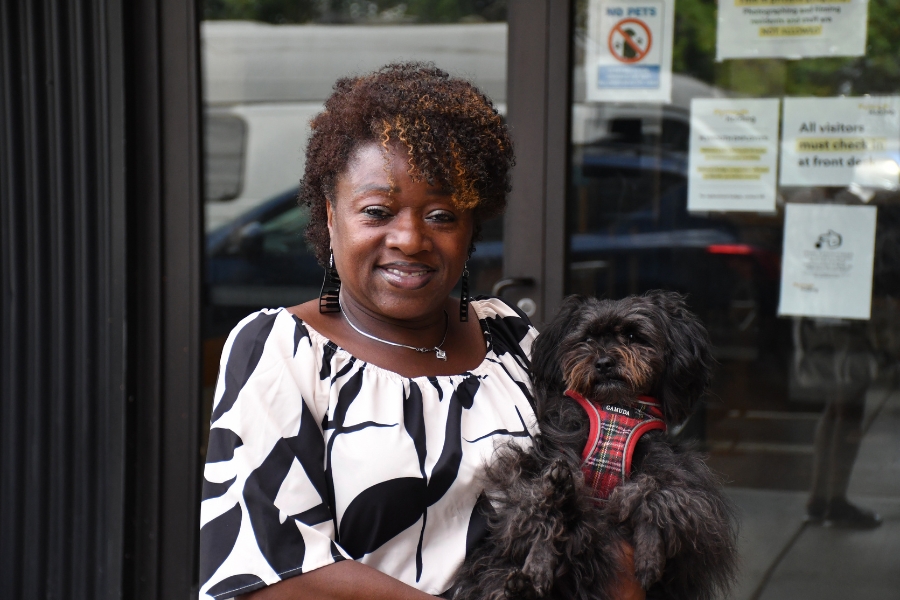
Sabrina J. and her dog, T’Challa
When Sabrina J. first joined the team at Plymouth Crossing in Bellevue, harm reduction was new to her.
She had worked in shelters before, but permanent supportive housing offered a different way to support people. Plymouth Housing provides fully furnished homes with no time limit for people recovering from homelessness. With stable housing and on-site support, residents have space to heal, rebuild and move forward at their own pace.
That support is grounded in harm reduction: the idea that people are more likely to heal when they are safe, housed and met without judgment. Plymouth recognizes that residents may be at different points in their journey. By reducing the immediate risks associated with substance use, harm reduction helps people stay safer and creates a foundation for healthier choices over time.
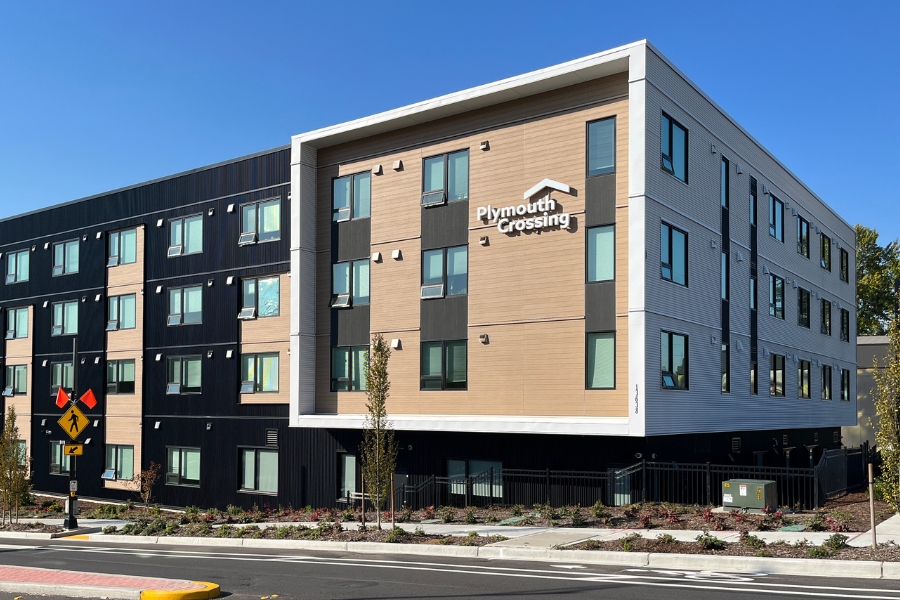
Plymouth Crossing in Bellevue, WA
Learning What Harm Reduction Looks Like
At first, Sabrina was not sure what to expect. Like many people encountering this model for the first time, she carried questions about what it meant to support residents who were still navigating substance use, trauma and complex life circumstances.
Over time, her understanding changed.
“I love my job,” Sabrina said. “I had never done this type of work before. I came from working in shelters and had just moved to Seattle. Plymouth made me realize how homelessness could happen to anyone and really helped me humanize people rather than judge them.”
At Plymouth Crossing, Sabrina saw that harm reduction is not about giving up on people or “enabling” them. It is about meeting residents where they are, building trust, and creating the conditions for healing to become possible.
She also saw how permanent supportive housing differs from shelter work. At Plymouth Crossing, residents have their own homes, consistent staff support, and the time and space to move forward at their own pace. That stability changes what is possible.
Located in Bellevue, Plymouth Crossing is Plymouth Housing’s first permanent supportive housing building on the Eastside. Sabrina said the building has developed a strong sense of pride and community since opening. Residents come from across the Eastside and King County, bringing different experiences, needs and hopes for the future.
For many residents, long histories of homelessness, trauma and distrust of systems can make it difficult to accept support right away. But over the past three years, Sabrina has seen residents begin to trust staff, participate in community life, and take steps toward stability that may not have felt possible before.
“Residents are not afraid to call for help if they need it,” Sabrina said. “They’re getting comfortable and confident.”
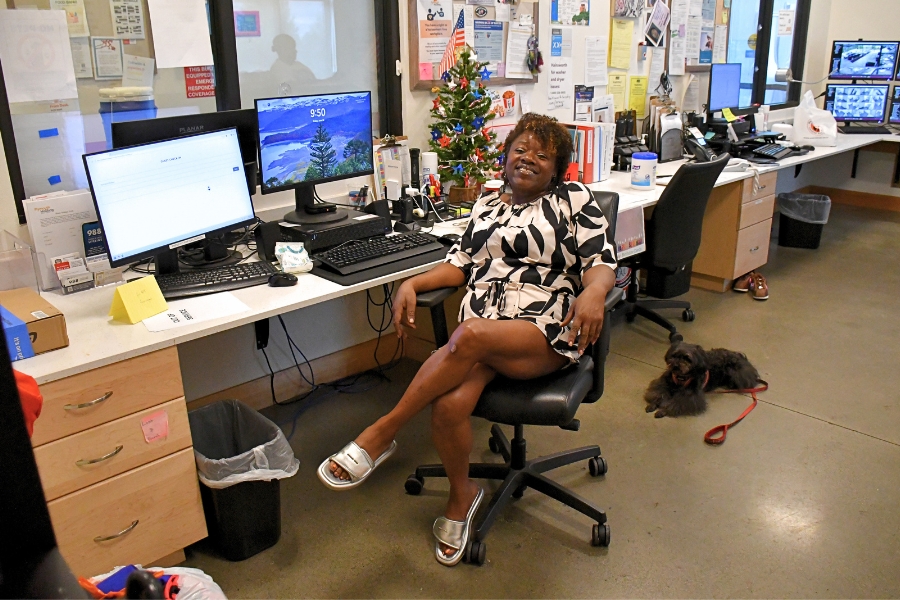
Sabrina and T’Challa working at the front desk
Sabrina has seen that change firsthand.
One resident stood out to her. When they first arrived at Plymouth Crossing, V. was emotional, reactive, and deeply distrustful of support. They did not participate in building community events and often struggled to connect with staff or neighbors.
But over time, V.’s case manager continued showing up for them. They learned that V. wanted to go back to school and helped with enrollment. They also helped V. access dental care, which had a major impact on their confidence and outlook.
Then V. began engaging more, trusting more, and imagining more for life. “They were able to stop drinking and begin living again,” Sabrina said.
Stories like V.’s remind Sabrina that recovery is not a one-stop destination. Healing takes time. Progress can be uneven. But housing creates the foundation residents need to move forward at their own pace.
Healing is not always immediate or linear.
At Plymouth Crossing, foundation includes more than an apartment. It includes case management, community meals, and resident leadership opportunities that give people a sense of agency and belonging where they live.
For Sabrina, seeing permanent supportive housing in action changed the way she understood the work and deepened her belief in Plymouth’s model. “Permanent supportive housing was a softer experience than I believed,” Sabrina said. “Plymouth instilled thoughtfulness and care and really gave people community.”
For people who may still be unsure about permanent supportive housing or harm reduction, Sabrina hopes they will remain open.
“Give us a chance,” she said. “Trial and error will happen. Patience is key. Change won’t happen overnight, but a lot of the discourse is untrue. This is a long game.”
After three years at Plymouth Crossing, Sabrina has seen what that long game can make possible: residents gaining confidence, building trust, reconnecting with their goals and beginning to experience joy.
And for Sabrina, it has also changed the way she sees the work.
Harm reduction is not a theory to her anymore. It is something she has watched unfold in real time, through patience, consistency, and the simple but powerful stability of home.

Sabrina and T’Challa greeting a resident