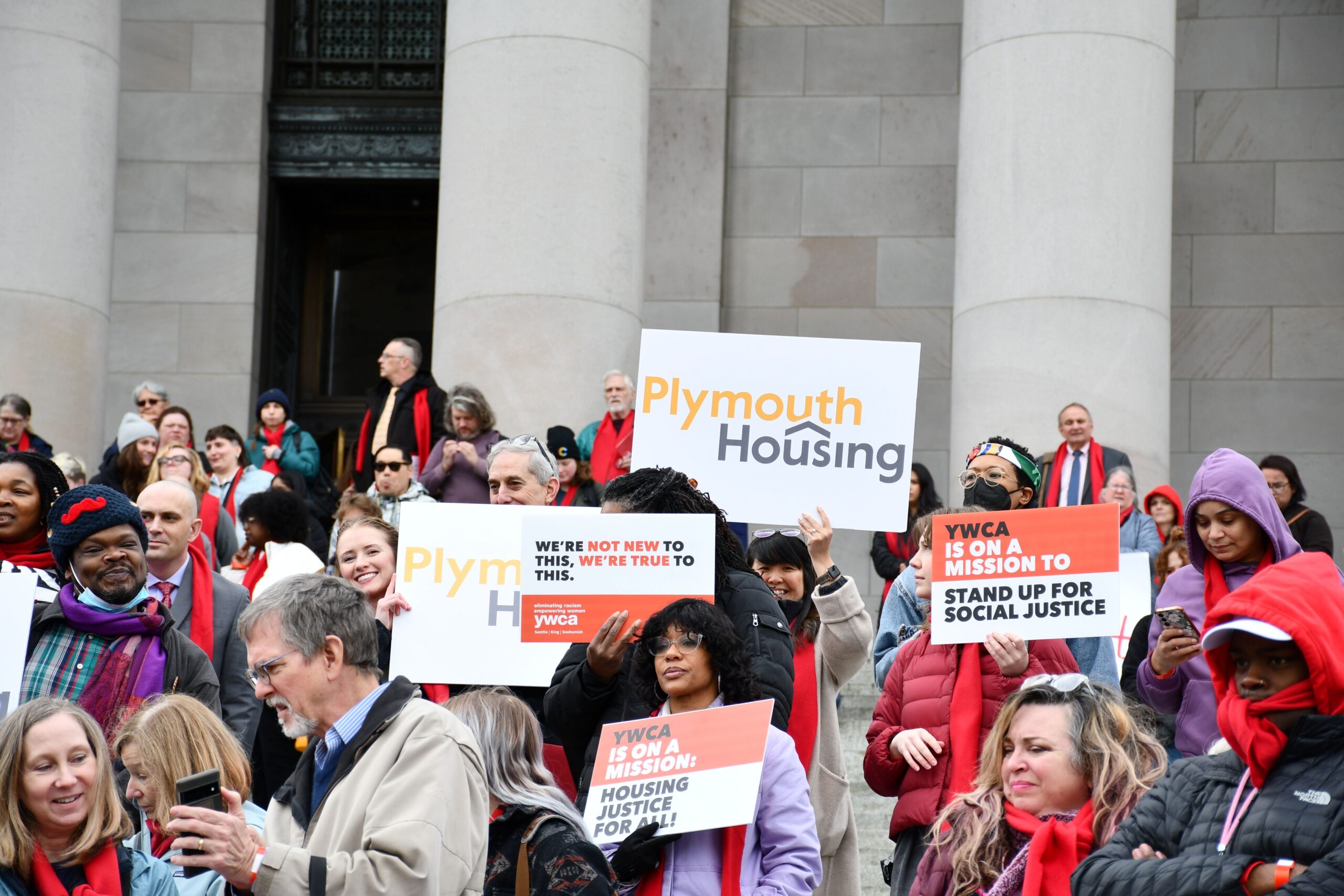
Hundreds of advocates attend Housing and Homelessness Advocacy Day each year
At Plymouth Housing, our mission is simple and urgent. We ensure that people who have experienced homelessness have safe, stable housing and the support they need to thrive. We do this most directly through the housing and services we provide. But our work extends beyond our buildings.
The ability to create permanent supportive housing depends heavily on public policy — the laws, regulations, funding, and broader priorities set by lawmakers at the federal, state, and local levels. These policies affect how quickly homes can be built, how much they cost, and who can access them.
That’s why policy advocacy is a key part of Plymouth’s mission. Through public education, grassroots advocacy (mobilizing ordinary individuals to speak up about issues that matter to them), and direct engagement with lawmakers, we work to protect and advance dignified housing for all.
Advocacy at the State Capitol
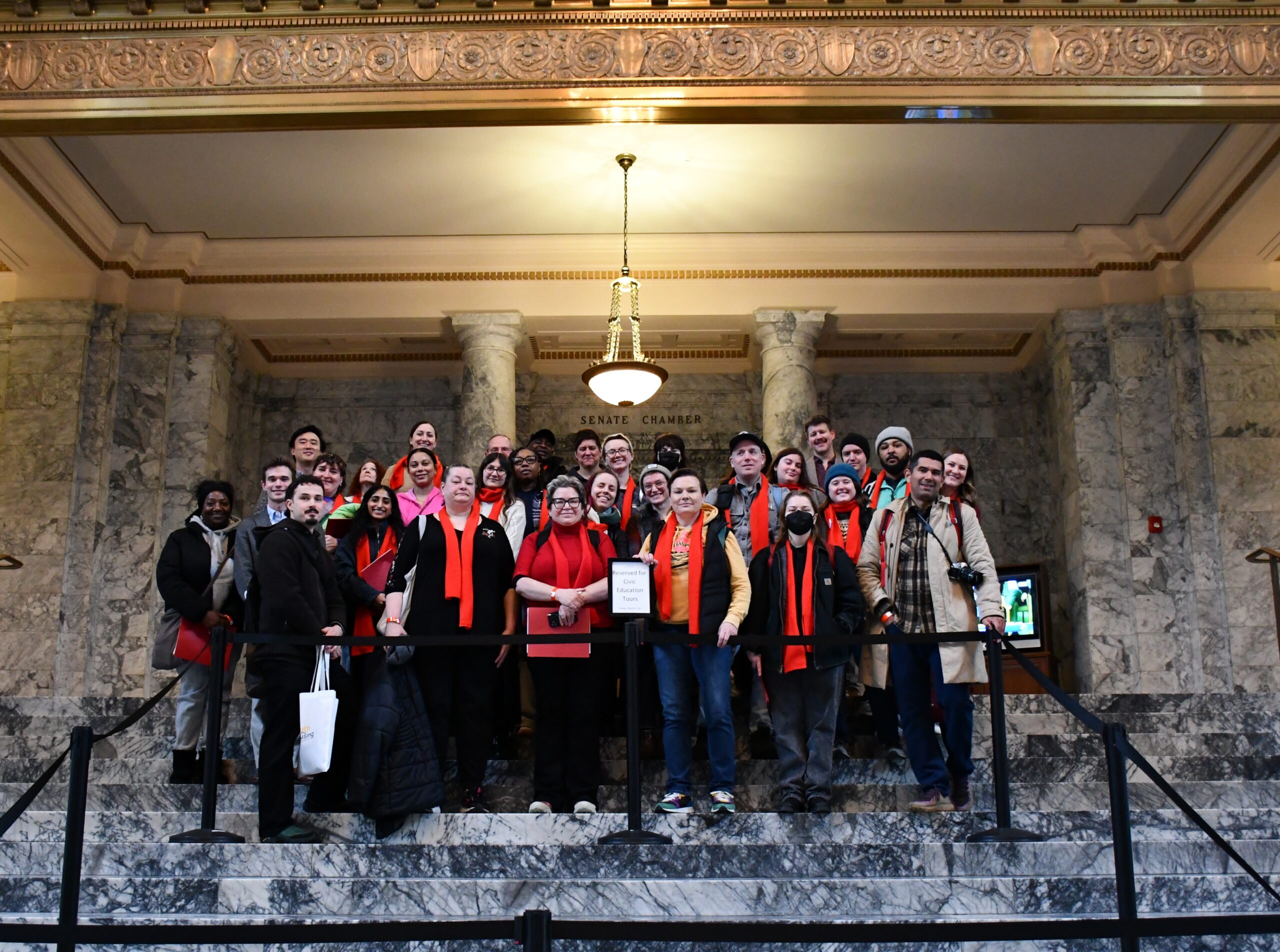
Plymouth staff, residents, and other constituents gather to meet with their senator at advocacy day
Each year from January through March or April, the Washington State Legislature meets in Olympia to pass new laws and set the state budget. It’s a fast-moving process, but there are plenty of ways for people to follow along and participate.
At Plymouth, we monitor proposed bills that could impact our work if they were to become law. We speak up and engage directly in the legislative process. That might mean sharing our expertise with lawmakers through public testimony, “signing in” to officially support bills that advance our mission and values, or letting our residents, staff, and supporters know how they can get involved.
We also participate in Housing and Homelessness Advocacy Day, an annual grassroots advocacy event that brings hundreds of Washingtonians to Olympia to show support for a shared vision where every person is safe, healthy, and housed. Every year, Plymouth gathers residents, staff, and board members to speak up about why they support our work.
In 2026, representing 12 legislative districts, residents shared how stability changed their lives while staff and board explained what it takes to build and sustain housing. Together, we delivered a clear message: permanent supportive housing works, and policies should reflect that reality.
House Bill 2266: Removing barriers to housing
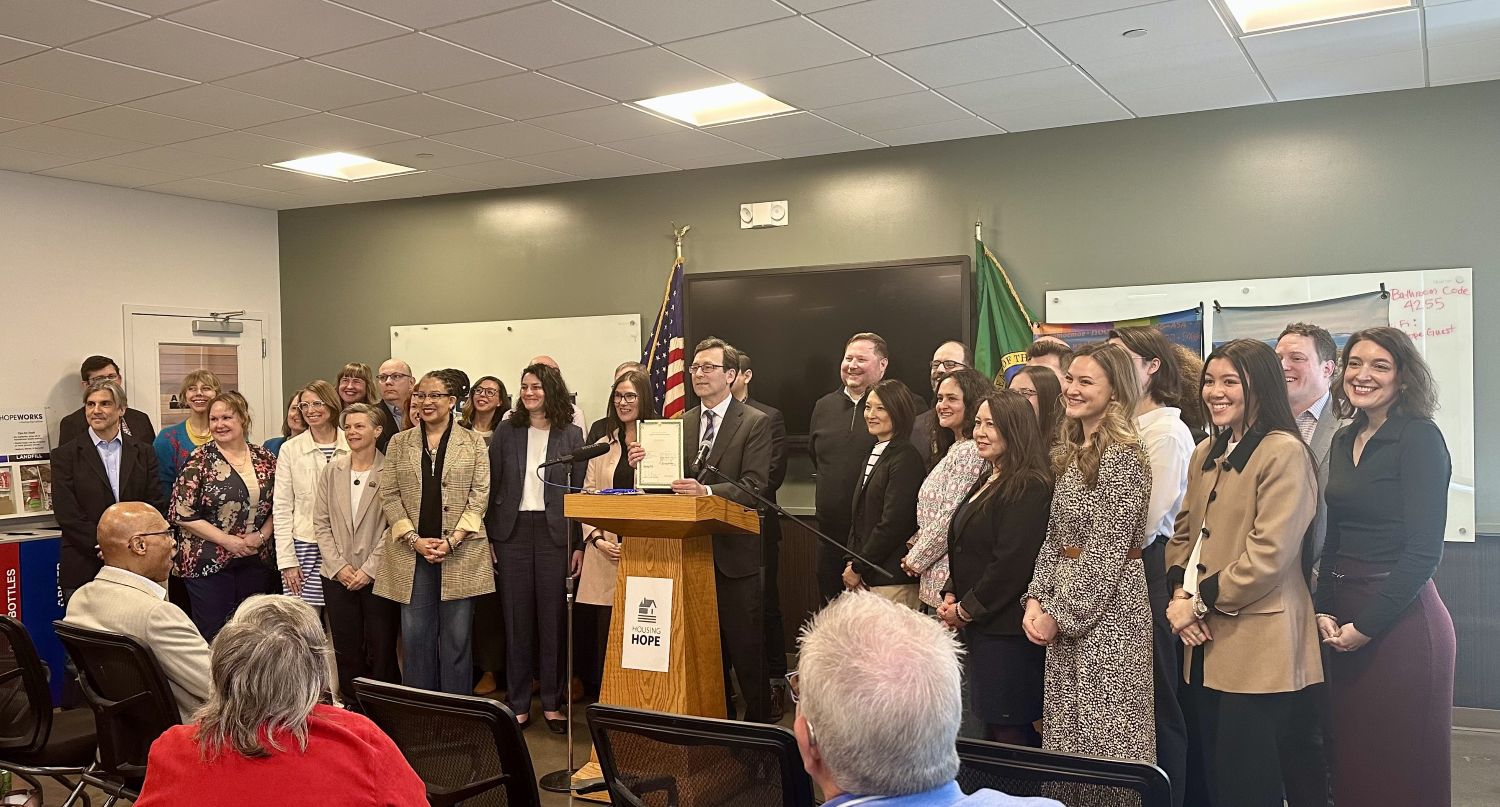
Plymouth staff and partners join Gov. Ferguson as HB 2266 is signed into law
In 2026, Plymouth and other housing and homelessness advocates celebrated a major win: Governor Bob Ferguson signed House Bill 2266 into law.
For years, many local jurisdictions imposed barriers that limited where and under what conditions shelter, transitional housing, emergency housing, and permanent supportive housing (STEP housing) could be built. Often, these barriers were rooted in stigma or neighborhood opposition. Examples included opaque and subjective approval processes, restrictive spacing requirements (i.e., banning permanent supportive housing within 1,000 feet of parks or libraries), and unfunded mandates for providers.
These supplemental restrictions and requirements made creating or operating STEP housing more costly, burdensome, and vulnerable to disruption – in some cases preventing STEP housing altogether or forcing existing shelter to shut down.
HB 2266 directly addresses this by tightly limiting what kinds of barriers cities and counties can impose on STEP housing. Permanent supportive housing and transitional housing must now be allowed in any zone wherever housing is allowed, on the same terms as other housing (e.g. height, density, and process), while shelter and emergency housing must be allowed wherever hotels are allowed. With some exceptions for shelter and when a city or county contributes land or significant funding to a project, local jurisdictions cannot impose conditions on STEP housing that are more restrictive than housing generally.
Our advocacy centered around a simple principle: Housing should not be treated differently based on who lives there. People in STEP housing have the same rights as anyone else, including freedom from discrimination in housing. Different zoning or supplemental restrictions on STEP housing not only undermine this principle, but have a disparate impact on people of protected classes who are disproportionately affected by homelessness: people with disabilities, seniors, veterans, and people of color.
This law doesn’t give permanent supportive housing special treatment. It simply ensures it is treated fairly – that housing is treated like housing. Providers like Plymouth can now spend less time navigating unnecessary barriers and more time focused on serving people.
Showing up, together
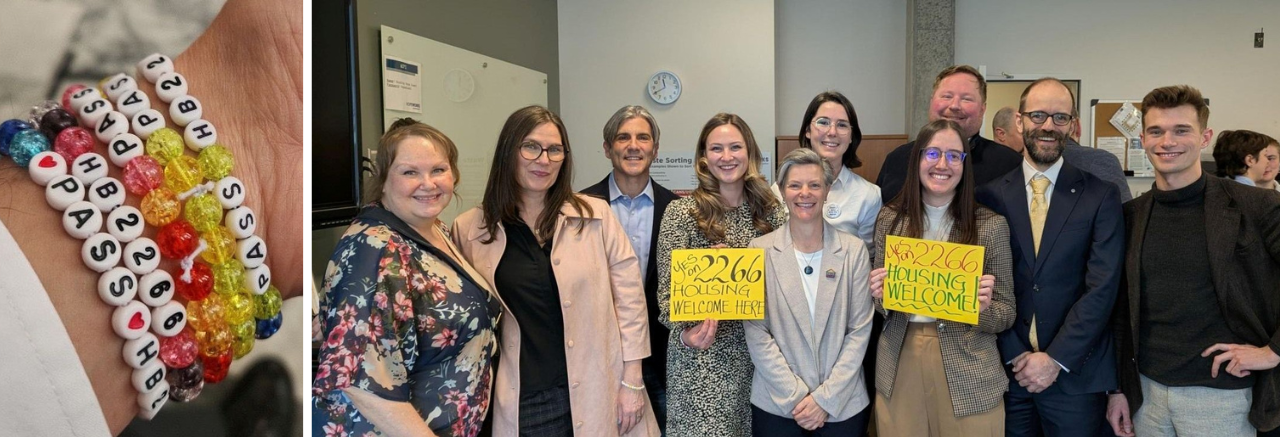
Plymouth’s handmade bracelets garner last-minute support for HB 2266; Advocates celebrate the bill being signed into law
Plymouth played a central role in shaping and advancing HB 2266 because our mission demanded it. We testified at every legislative hearing, bringing forward decades of expertise developing and operating supportive housing. We worked closely with partners across the state to explain what works, what doesn’t, and why the stakes are so high when housing is delayed.
That approach mattered, and supporters showed up. Thanks to our outreach, and efforts from partners like the Washington Low Income Housing Alliance, Disability Rights Washington, Futurewise, and the Seattle-King County Coalition on Homelessness, HB 2266 received some of the highest levels of constituent engagement during the session — comparable to the Millionaires Tax.
Washingtonians across the state came together to stand up for more affordable housing, and it made a real difference. That public support didn’t appear overnight. It reflects years of relationship‑building, education, and lived experience shared openly and directly with policymakers.
Your voice matters!
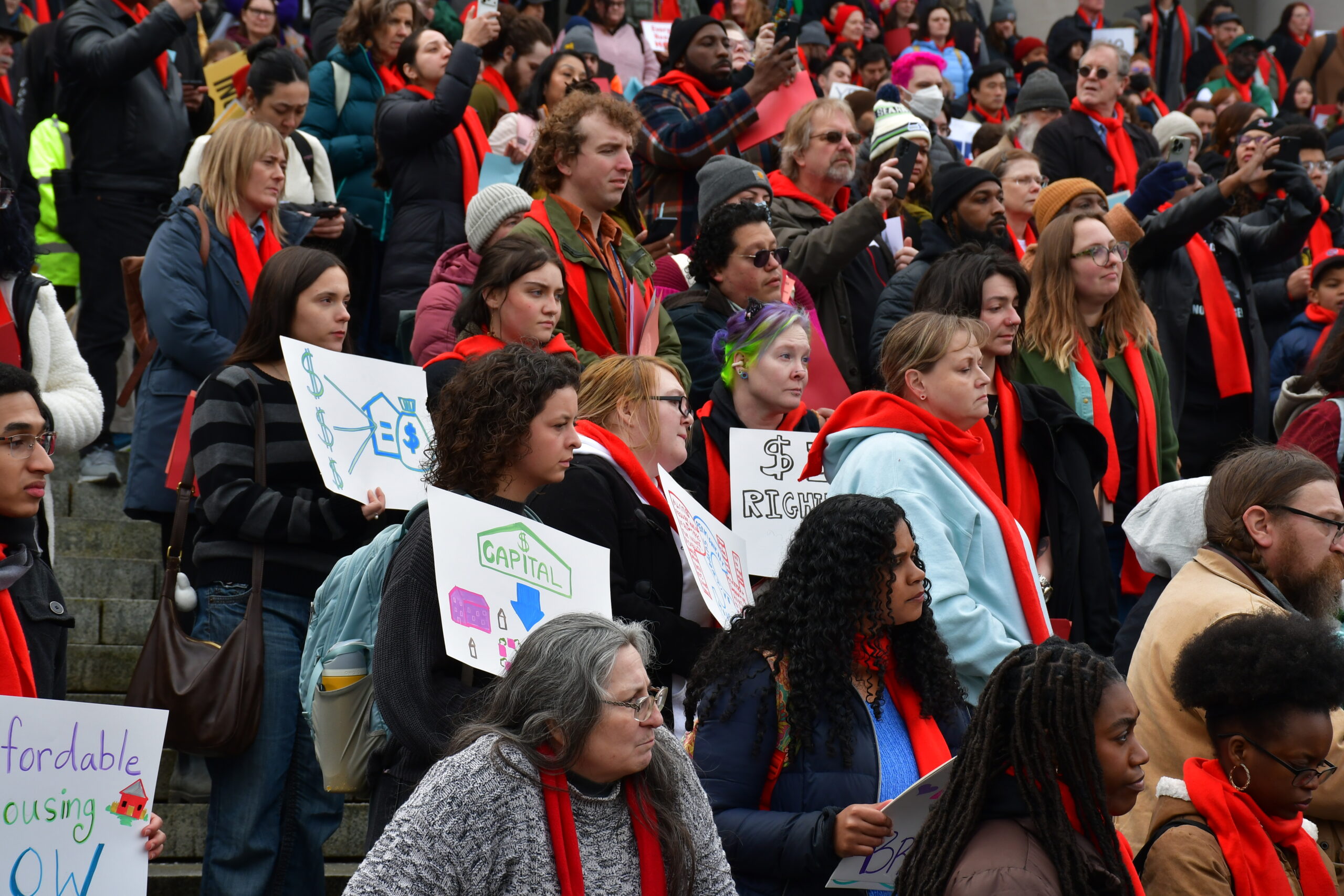
This is what grassroots advocacy looks like.
With the Governor’s signature, HB 2266 is now law, and its impact will be real and practical. Housing can move forward more quickly, costs can be contained, and nonprofit providers can better meet the urgency of the homelessness crisis.
If you rallied at the capital, made a call, or sent a message to your lawmakers, please know: Your voice mattered. Hundreds of advocates stepped up to help ensure permanent supportive housing is treated fairly and not subjected to unnecessary barriers. When communities engage by showing up and speaking out, meaningful changes follow.
Stay in the loop with Plymouth Housing on social media and subscribe to our newsletter to learn about ways to engage in the legislative process. Every voice makes a difference, and we truly value yours!