In 2024, an estimated 1,910 people experienced homelessness in East King County — 11% of the countywide total. As the Eastside’s population and housing costs continue to grow, so too does the urgency to ensure that every neighbor has a place to call home.
While Seattle has built a broad network of services for people facing homelessness, Eastside communities are still expanding theirs. Affordable housing options are limited and long-term recovery programs can be hard to find. Many organizations do extraordinary work meeting urgent needs — food, shelter, safety — but lasting stability requires something deeper.
One solution is the model of permanent supportive housing (PSH), meaning there is no time limit placed on the housing people receive and on-site services are included as part of their residency. In 2023, Seattle-based Plymouth Housing expanded to the Eastside establishing Bellevue’s first PSH community, Plymouth Crossing.
“Once the immediate crisis of homelessness is over, people can begin to heal from the trauma experienced before and during homelessness,” says Mary Glennon, Plymouth’s senior director of permanent supportive housing, who has over 15 years of experience with unhoused communities.
For Michael, who lives with ADHD and autism spectrum disorder, the consistency of having a home and access to care has allowed him to regain focus and purpose after years of employment challenges. Kim, another Eastside resident, found safety after fleeing an abusive relationship and spending nights sleeping on sidewalks. Having a permanent home gave her stability; wraparound services helped her rebuild her life.
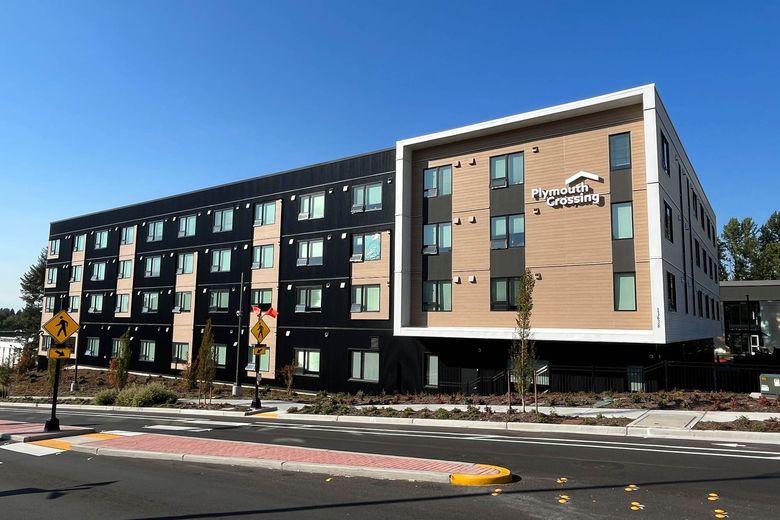
Plymouth Crossing in Bellevue
Plymouth’s resident data from 2024 reflects a microcosm of the challenges that lead to being unhoused on the Eastside — 94% of those served had at least one disability, 78% struggled with substance use disorder and 49% had a physical disability or chronic health condition. Each of these circumstances make finding and keeping full-time employment complicated — in a market where the median price for a single-family home is $1.7 million and rents continue to rise, outpacing both state and national trends.
“We see that multiple systems are impacted,” says Glennon. Depression can lay the ground for social isolation, which can result in losses of employment and income. To lessen the pain, a person might turn to substance use, which adds another layer of complexity. “But if we focus only on stopping the substance use, we miss all the other impacted systems,” she says of Plymouth’s holistic model of care.
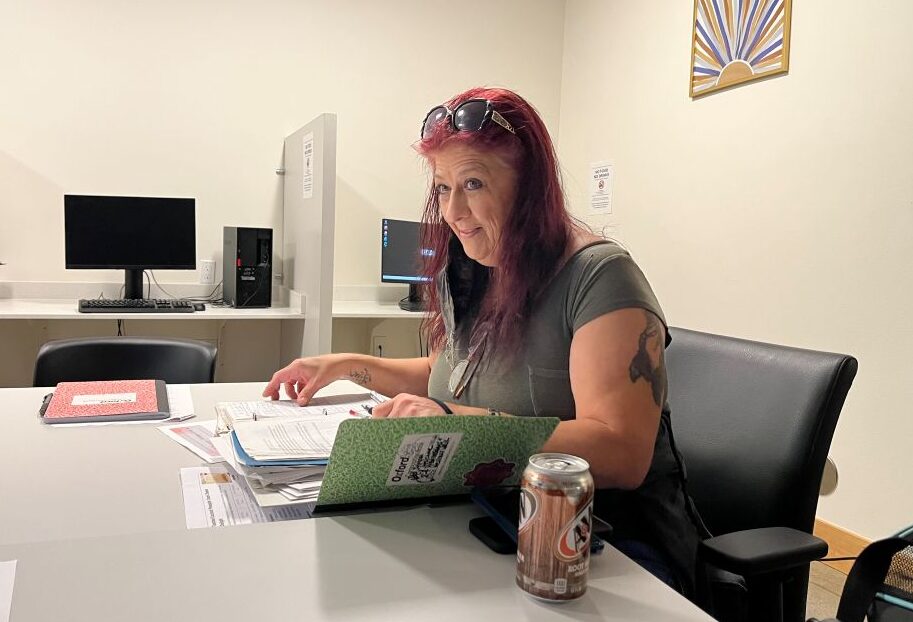
Resident Jodi participating in a writing circle at Plymouth Crossing
That’s where wraparound services — the “supportive” part of PSH — come in. Residents can access medical care, counseling, substance use treatment, financial coaching, community meals and activities designed to foster connection and self-sufficiency. The goal is to “wrap” people in support that not only stabilizes their housing but helps them thrive. The results are promising: nearly 95% of Plymouth residents have remained in permanent housing, and King County’s Health Through Housing initiative also showed a 95% success rate in 2024.
“Many develop relationships with their neighbors in the building, get to know the neighborhood outside, and get care systems set up,” says Glennon. She adds that a permanent supportive housing model offers residents more than just shelter; it’s a chance for a new beginning to form community and a sense of belonging after periods of insecurity. When the essential needs of Eastsiders are met, it creates a bedrock from which to move forward, letting people catch a breath and look to what’s next.