Decades ago, in the wake of Hurricane Andrew, Steven built a successful electronic door business in Florida. He was thriving. But long hours and physical strain led him to a path of substance use. He lost everything and spent years without a stable place to live. That all changed when he moved into a Plymouth apartment.
Now, 12 years later, Steven is housed and celebrating six months of recovery thanks to accessing treatment. And, with support from a Plymouth program that helps residents manage their finances, he’s reached another major milestone: He no longer needs rental assistance.
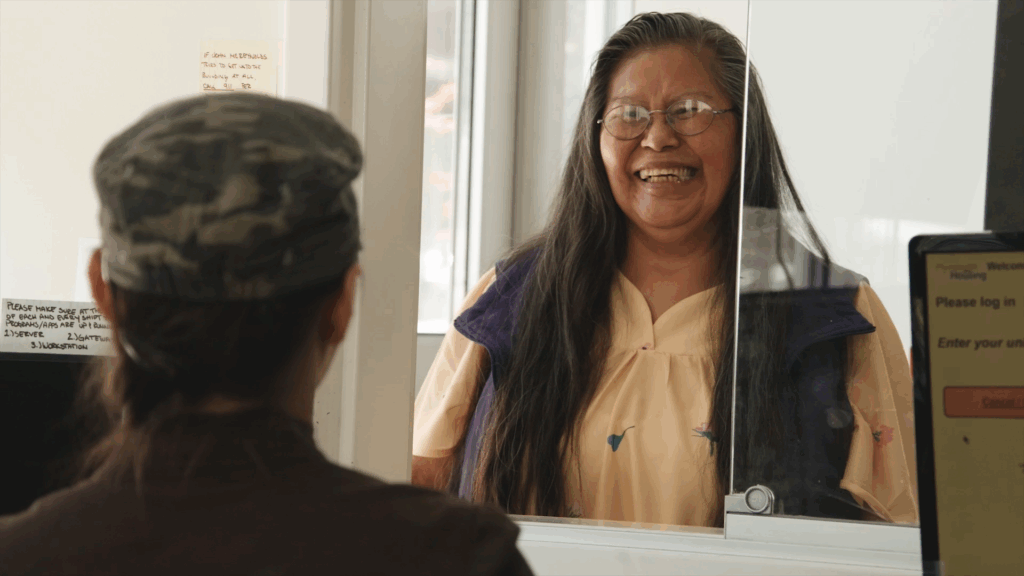
A Plymouth resident visits with front desk staff
The Payee Program: A path to independence
Like anyone who rents their home, Plymouth residents have responsibilities — including paying rent. Residents contribute 30% of their income toward housing costs, and for those without income at move-in, Plymouth covers the minimum rent for up to 12 months or until they’re connected to a source of income. These expectations are part of what makes long-term stability possible.
But for people exiting homelessness, maintaining financial stability is often a steep climb. Many residents arrive with no income, limited access to benefits, and little experience managing rent or budgeting. Building consistency takes time — and compassionate, hands-on support from staff who understand the challenges and are committed to helping residents succeed.
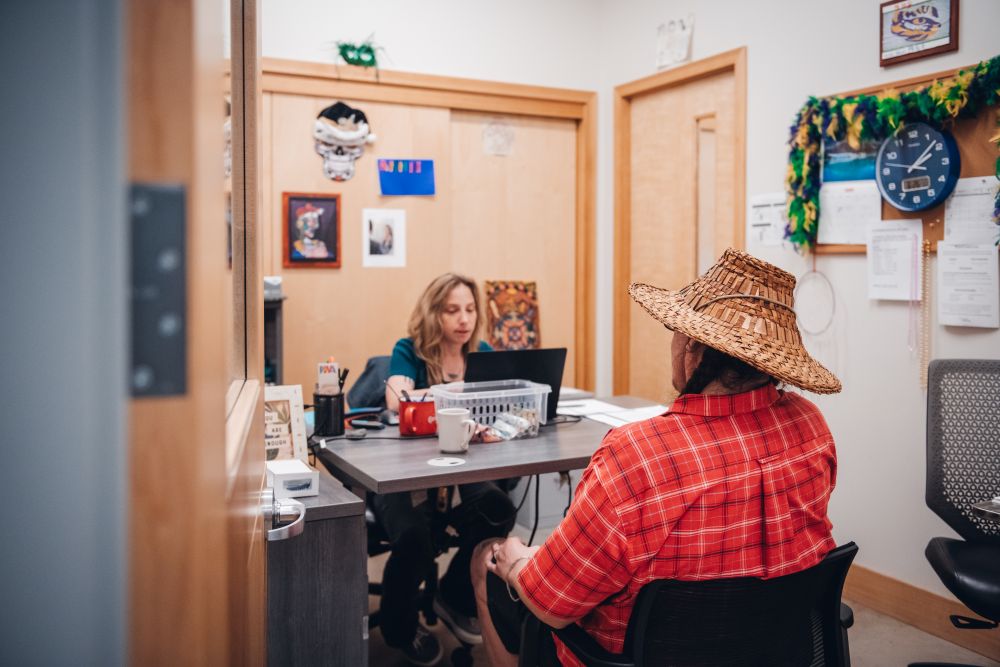
Anne Whitaker, a Housing Case Manager at Plymouth, assists a resident
One of the most effective tools Plymouth uses to help residents like Steven stay housed is the Plymouth Payee Program (PPP), where staff pay rent on residents’ behalf, accessing their benefits or other income by proxy. Representative Payees take on the responsibility of paying residents’ rent until they are ready to take it on independently.
The Payee Program isn’t just about paying bills — it’s about building trust and teaching financial literacy. Staff meet with residents weekly to discuss their finances, ensure they have access to their funds, and help them develop what Steffany Whitmore, Representative Payee, calls “a new muscle” for financial consistency.
“Steven was part of PPP for years. Time, treatment, and stable living have given him the footing to turn his back on substance use disorder,” said John Engel, Financial Stability Program Manager at Plymouth. “Looking at his clear-eyed request to leave the payee program is the greatest success that we can aspire to. Steven did need PPP; and now he can take ownership of his money and his life.”
Creative approaches to keeping people housed
While Plymouth’s wraparound services — case management, medical care, mental health support — are most recognized, the work staff do to help residents stay housed in the first place is just as vital. Residents must meet certain requirements to remain in their homes, and without proper support, that can be difficult. Plymouth staff are there to help navigate those challenges.
One way is through encouraging and enabling recertification, an annual process ensuring that residents continue to meet eligibility requirements to receive housing. At Plymouth, staff not only assist residents in completing recertification applications correctly. They also do extensive outreach and rapport-building to incentivize on-time completion of forms. “Pizza and Pastabilities” and “Floats and Follow-ups” are two popular building events that encourage participation, according to Portfolio Manager Yvonne Duncan.
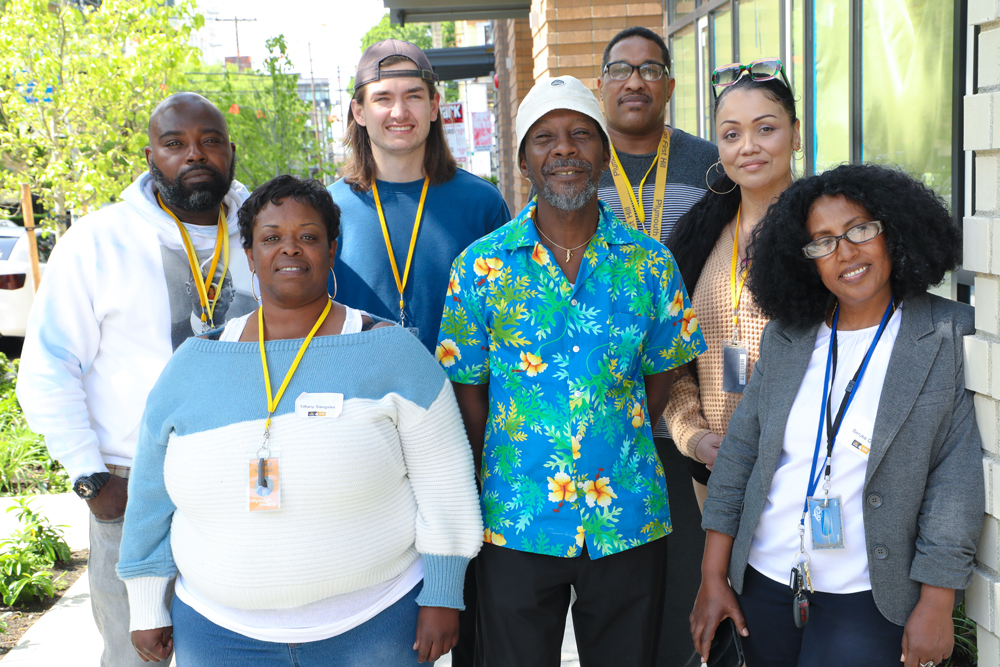
Plymouth staff on First Hill
Plymouth’s eviction-prevention strategies go far beyond paperwork. Staff tailor their approaches to meet residents where they are. At one building, rent raffles reward residents who pay rent before the 10th of the month with a chance to win a gift card. At another, “Popcorn Fridays” offer friendly reminders in a relaxed setting. Similarly engaging incentives across Plymouth buildings help keep residents on track without pressure. Most important of all: these efforts foster trust and open communication.
Staff also promote financial literacy and income stability by connecting residents to job opportunities. They assist with Social Security and benefits enrollment, provide transportation to appointments, and help secure essential documentation.
While eviction may be necessary in rare cases to protect the broader community, it is always a last resort. Plymouth’s focus is on stability, dignity, and opportunity — giving residents the tools they need to succeed, and the time they need to rebuild.
A future full of possibility
Steven’s story is one of many. It’s a reminder that behind every apartment door is a person working toward a better future, with a team of Plymouth staff working just as hard to help them keep the keys.
Steven credits much of his progress to Plymouth — not just for providing a safe place to live, but for offering the kind of support that makes stability possible. “Whatever I need help with, I can just reach out to someone,” he says. “And that’s awesome.”