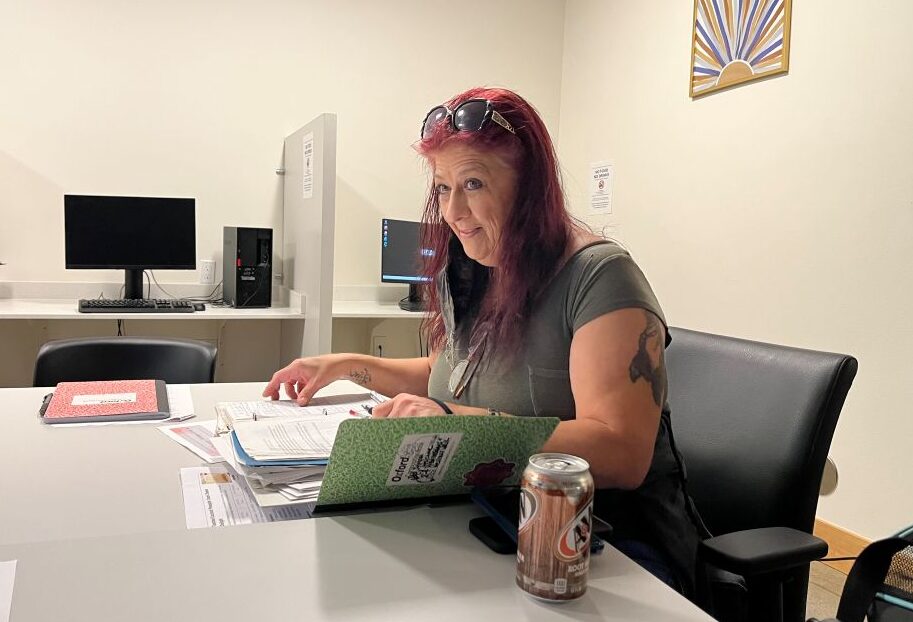
Jodi keeps vivid dream journals to help guide her healing
On a sunny Wednesday afternoon, the community room at Plymouth Crossing — Plymouth Housing’s building in Bellevue — buzzed with quiet creativity and connection. Lo-fi beats played in the background. Snacks and notebooks were laid out. Kim, a resident, read aloud a prompt reflecting on recovery.
This is the Recovery Writing Circle, a weekly workshop led by Peer Support Specialist and Seattle art activist Nic Masangkay. Drawing from their own lived experience with mental health and substance use recovery, and a background in spoken-word poetry, music, and arts activism, Nic creates space for residents to explore writing in any form — journal entries, poetry, rap lyrics, memoir, fiction, and more.
During National Recovery Month this September, we’re honoring the creative ways that Plymouth staff help our residents through recovery — a process defined as helping individuals to improve well-being, live self-directed lives, and strive to reach one’s full potential. At Plymouth, our success rate of helping people remain stably housed is 95%, due to our holistic approach that cares for people in body, mind and spirit.
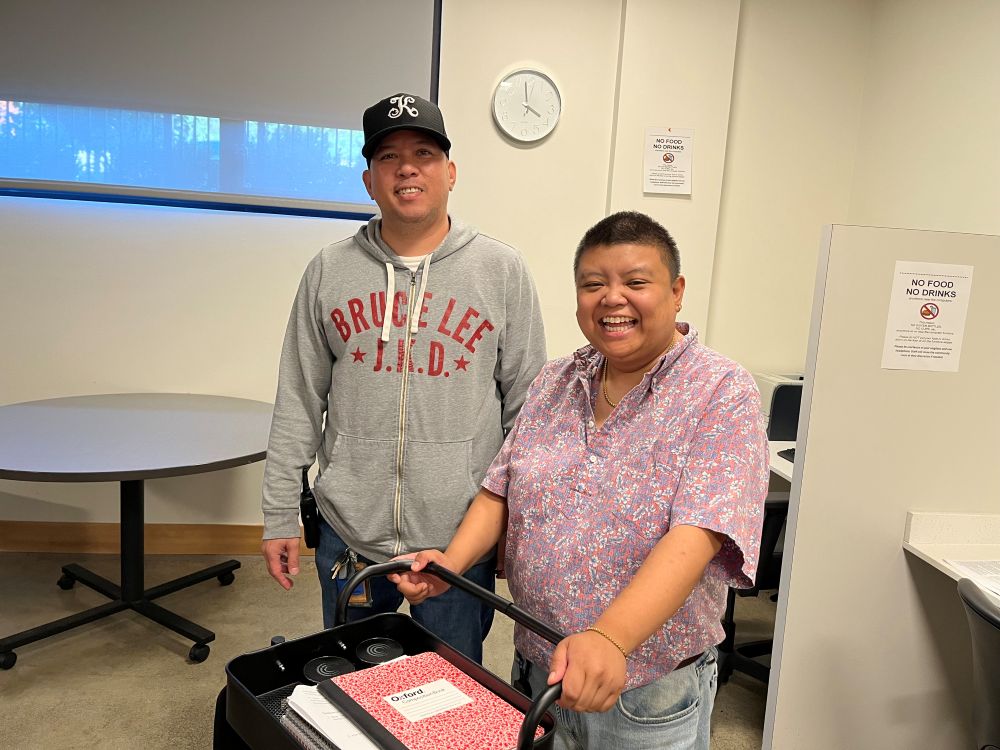
Nic, right, with Lead Peer Support Specialist Kevin Alvarado
For Nic, community care has been essential in healing. Their own recovery journey was shaped by the spoken-word scene they found after moving to Seattle for college. Newly out as queer and trans, they remember how embraced they felt by the community that took them in and helped them grow. Now, Nic brings that same energy and hope to Plymouth residents.
“We’re providing tools that can be used however you see fit — for your life, your journey, and your recovery, whether that’s from substance use, a mental health condition, or other challenges,” Nic said. The writing circle flows gently, allowing participants to come and go as needed.
Each session is guided by the needs of the participants, like Kim, Jodi and Newanda. A writer since childhood, Kim appreciates the workshop as a grounding mid-week ritual. It’s a reminder to keep in the habit of journaling — which helps her get in touch with her feelings and “see where those feelings might take me.”
For Jodi, the Recovery Writing Circle offers a different type of healing. For many years, she has been writing about her night terrors to help deal with PTSD and panic attacks, analyzing them with her psychotherapist. Sometimes Jodi starts in black ink and switches to color to mark different parts of a dream; other times she illustrates scenes with pen on paper — a type of “psycho scribble” that she finds helpful to analyze later with support.
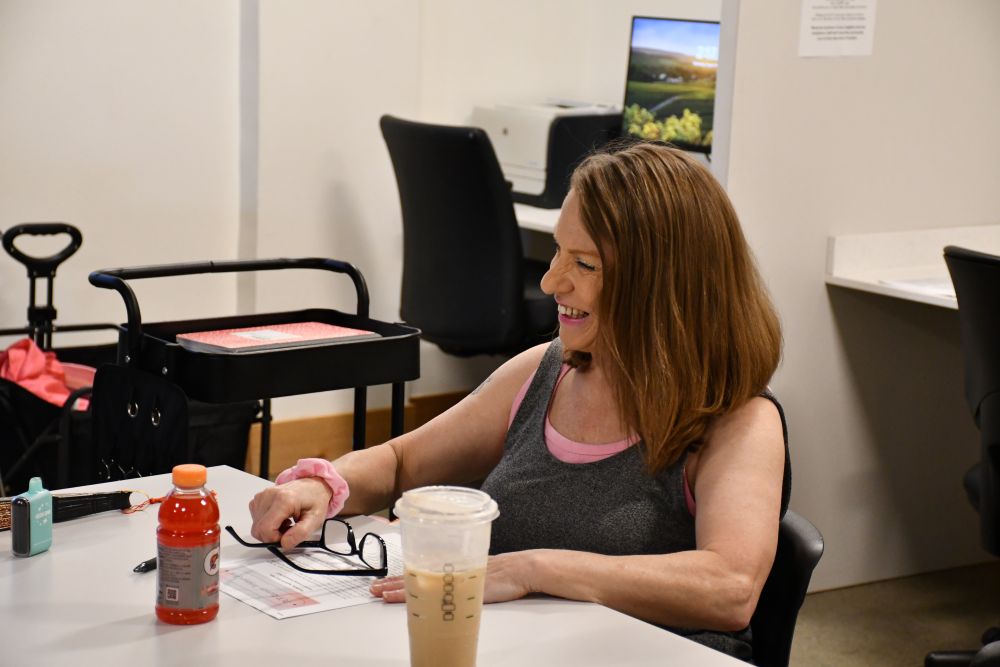
Kim enjoys writing as a grounding mid-week ritual
Newanda reflects on her own writing process, shaped in part by learning disabilities. Joined by her small dog, Newanda describes journaling in her brain, figuring out what she wants to write, visualizing the page, and then revising. Newanda starts a conversation with the group about how “writing” can take different forms, including verbal storytelling and singing.
Someday, the Recovery Writing Circle might become an open mic or story share. For now, the group continues each week, with a different group and prompt each time. It’s a space where recovery is not defined by rules or timelines, but by self-expression and connection — because healing happens differently for everyone.