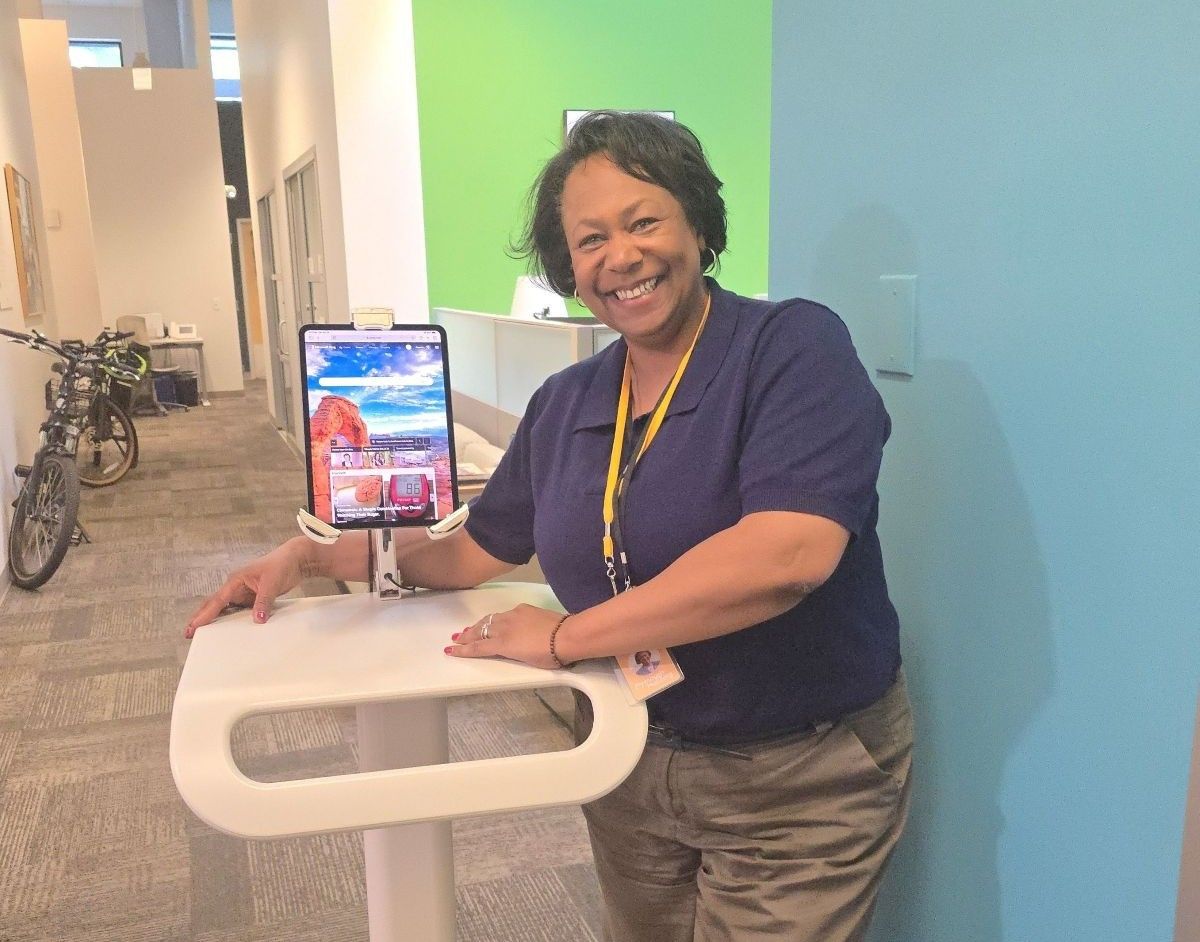
Danie Eagleton with a telehealth docking station, which Plymouth residents can use to take virtual appointments
Plymouth Housing provides housing and support to help people heal. But how do we provide that support? What makes permanent supportive housing (PSH) so effective — and why do we need more of this housing in our region?
Danie Eagleton, who leads Plymouth’s Quality, Innovation & Health (QIH) team, shares what residents need after homelessness, how her team integrates care, and how Plymouth helps people stabilize for the long term.
What does the Quality, Innovation & Health (QIH) team do?
QIH is the “services engine” behind Plymouth’s model. We look at how to support residents day-to-day. It’s where we ask the most important questions: Are we providing what people truly need to be well? Are we partnering well with other agencies? Are residents getting the full support they deserve?
At Plymouth, housing is the foundation. QIH builds on top of that to help people stabilize and thrive. This includes case management and community connections, behavioral health care (which addresses both mental health and substance use care), and physical healthcare.
We establish clear standards of care and implement quality assurance practices — including supervision, documentation review, and administrative oversight — to ensure consistency, safety, and high-quality service delivery.
We also look to leaders in the field — including the Substance Abuse and Mental Health Services Administration (SAMHSA) and the Corporation for Supportive Housing — to align our work with evidence-based practices such as Housing First, harm reduction, and trauma-informed care. All of this makes sure residents are getting consistent, high-quality support.
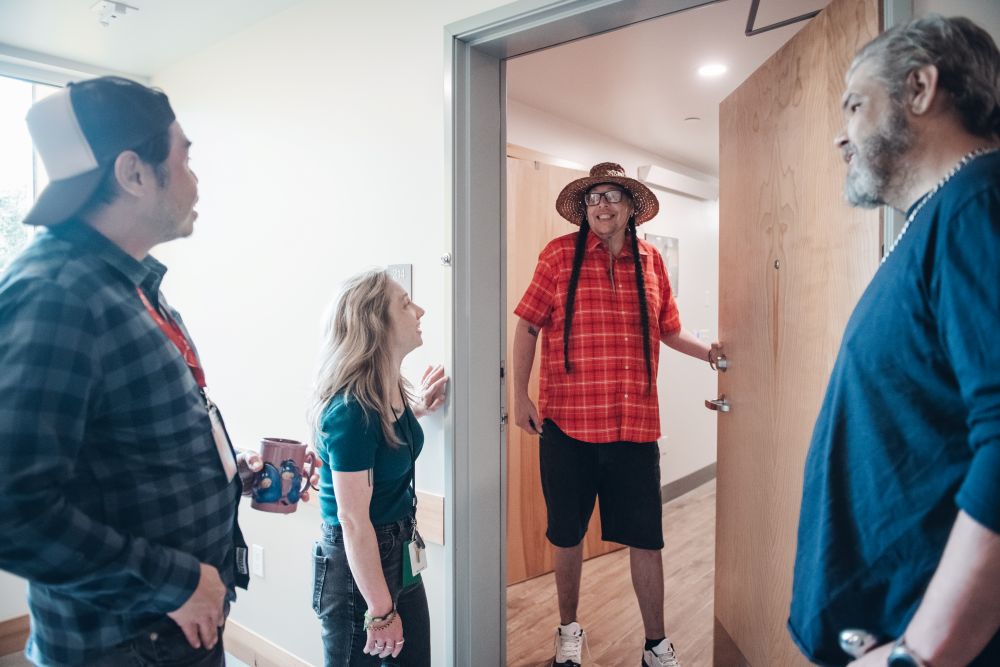
A resident opens his apartment door to case managers (left) and a neighbor (right)
What does it take for someone to find stability after homelessness?
The first thing to understand is that long-term homelessness is traumatizing, often adding to existing trauma. Healing from complex trauma requires connection. Relationships are what transform people. It also requires learning new life skills — new ways of thinking and doing things.
You can do therapy and evidence-based treatment, but for change to occur, there must be new learning. And people need to feel safe enough to learn. They need to be in community without stigma.
At Plymouth we practice Transformational Engagement — a deliberate partnership with residents that honors their lived experiences, cultural identities, and personal goals. We seek to understand who our residents are, what has shaped their journey, and how they want to design their future. Our work centers on dignity, trust, and collaboration.
It can be as simple as meeting someone where they are. A resident recently came to his case manager asking for food; she gave him groceries. Not long after, he asked, “Can you help me get into detox?” That moment was possible because a trusting relationship was already in place.
How does Plymouth integrate behavioral health into our services?
We do this through strong external partnerships with agencies that already provide behavioral health care. These include organizations like the Counseling, Recovery, and Wellness Program (CReW), the Program for Assertive Community Treatment (PACT), Valley Cities Behavioral Health Care, and Connections Kirkland.
Every Plymouth building is connected with a local mental health provider, ensuring residents can access therapy, medication support, and case coordination from teams familiar with our communities. Our staff and partner clinicians meet regularly to coordinate care and build shared plans.
QIH strengthens these community partnerships across King County so referrals are smooth and support is comprehensive – because meaningful impact requires collaboration beyond our organization.
Below, watch a video about how Plymouth meets complex needs through permanent supportive housing.
Tell us about Plymouth Crossing.
We’re also piloting new approaches, like at Plymouth Crossing, our first Eastside building and the only permanent supportive housing (so far) in Bellevue. With funding from the City of Bellevue, PCR has on-site peer support and contingency management (CM) in partnership with Washington State University.
CM is a recovery method where people earn small incentives — often gift cards — for meeting goals like reducing or stopping substance use. It’s simple, structured, and rooted in positive reinforcement.
Pilots like this help us meet real needs, especially because traditional housing dollars don’t cover behavioral health care. And so far, CM has been incredibly effective for many residents on the path to recovery from substance use disorder.
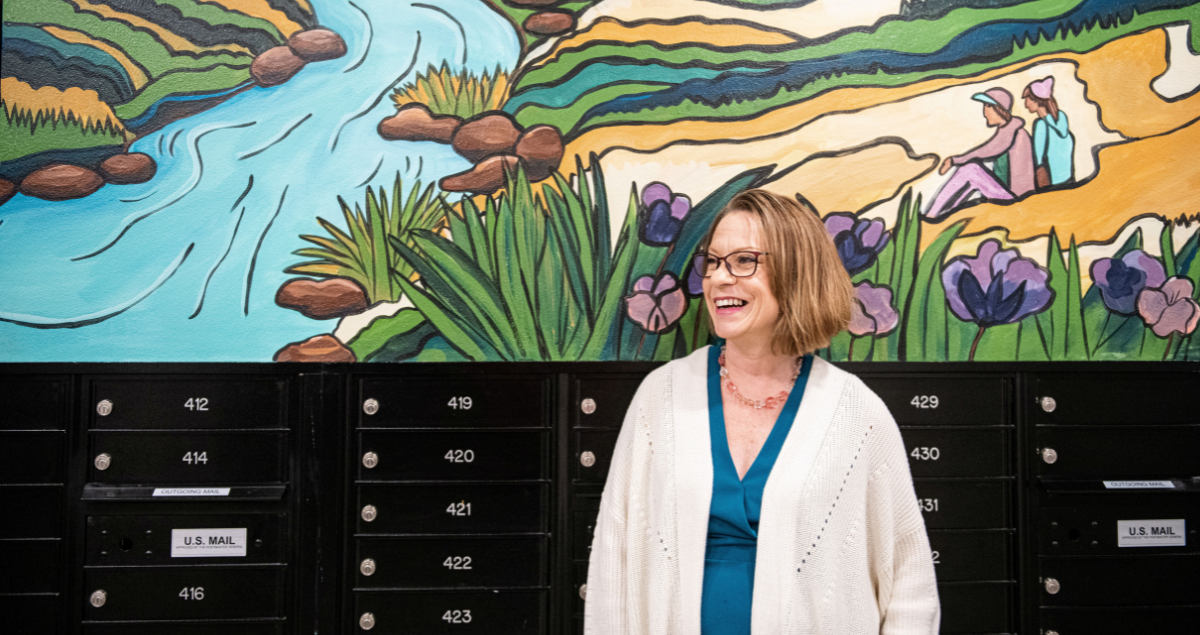
Kim lives at Plymouth Crossing, Plymouth’s first building on the Eastside
How do your past experiences shape your work at Plymouth?
Back in graduate school I’d ask: “What does it take for someone who’s been traumatized to actually succeed?” That question has guided my life’s work.
I’ve worked in employment programs for people with chronic mental illness, supported crisis response, and helped build recovery-oriented systems at behavioral health facilities. I’ve also trained new clinicians.
All of that tells me one thing: people can make real change when the system around them believes in their ability to heal. So at Plymouth, my focus is building a system where residents feel held, staff feel supported, and home is the foundation.
What’s something at Plymouth that inspires you?
I want our residents to have opportunities to thrive, not just survive. To be out in the world and engage in things they enjoy. I want them to have the opportunity for a quality of life that they name — that they design.
That includes leadership opportunities. Our resident councils are a great example. These are resident-led groups at Plymouth buildings that meet to discuss community issues and advocate for residents. Last year they held formal elections to choose leaders, and now they’re up and running. Through this initiative, residents are learning to speak up, present, collaborate, and see themselves as part of a team. That’s transformational.
I love theater and classic films. And I’m happiest by the ocean, taking photos and recharging. I want our residents to be able to connect to their passions and find new ones, too, just like the rest of us do.
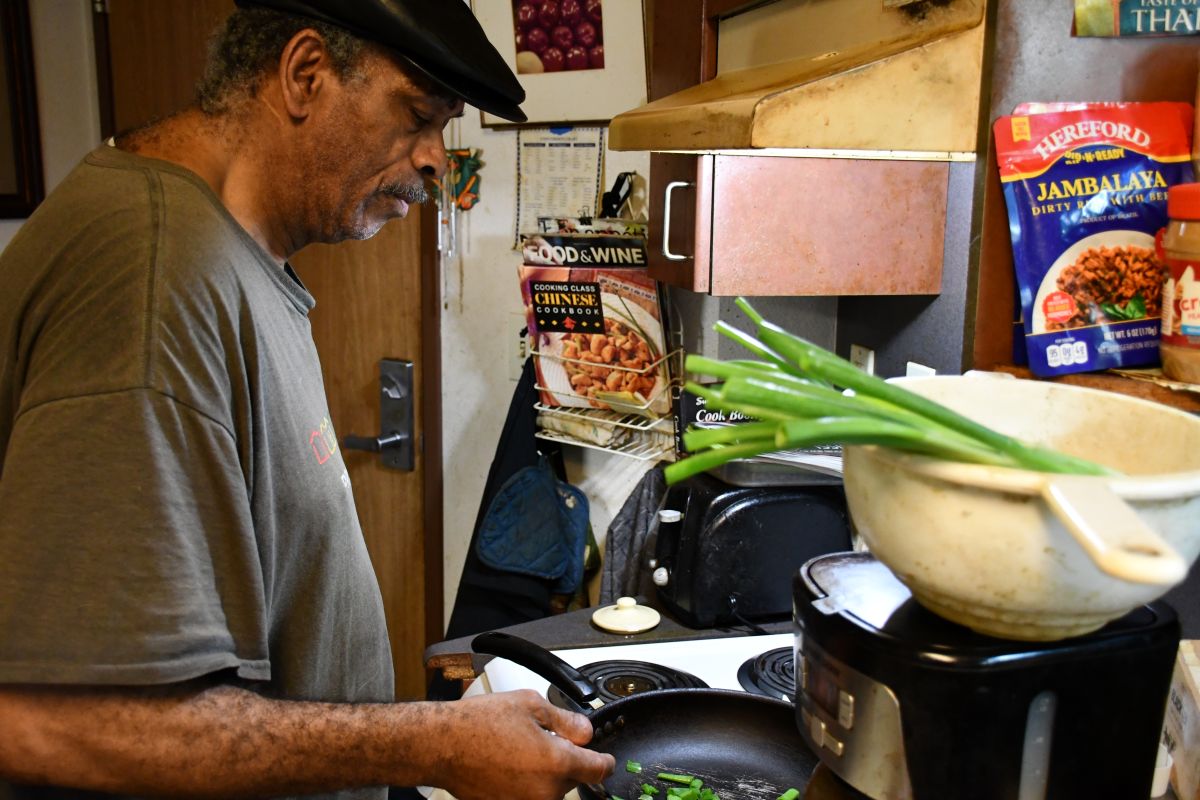
Plymouth resident Victor, a former chef, sautés scallions he grew in his building’s rooftop garden
What do you want to leave our readers with?
When people in the community feel frustrated about what they see on the streets, I want them to channel that energy into advocating to better fund behavioral health in our communities. We need resources to support skilled providers who know how to work with trauma. This will help us bring more folks inside from the cold, into stable housing where they want to stay – for good.
Your voice really does matter here. When you speak up for behavioral health funding, you’re helping build the system our residents deserve: one that heals, stabilizes, and makes permanent supportive housing work.