Over more than four decades, Plymouth Housing has grown from a single, urgent idea — that everyone deserves a safe, permanent place to call home — into a network of buildings and services that now support nearly 1,500 neighbors.
As we celebrate Black History Month, we honor three Black women whose lives, commitments, and courage stretch across generations and whose names now live on as Plymouth buildings: Bertha Pitts Campbell, Sylvia Odom, and Sheila Stanton.
Bertha Pitts Campbell
Bertha Pitts Campbell was a lifelong advocate for racial justice and women’s suffrage who, in her 100 years, helped lay the groundwork for civil rights progress in Seattle and beyond.
Campbell’s commitment to equity showed up early and often. In college, she co‑founded Delta Sigma Theta, a national Black public service sorority. After moving to Seattle, Campbell became the first Black board member of the YWCA of Seattle-King County. She also helped launch the Christian Friends for Racial Equality, an interracial organization that fought discriminatory housing policies and expanded civic opportunities for Black residents.
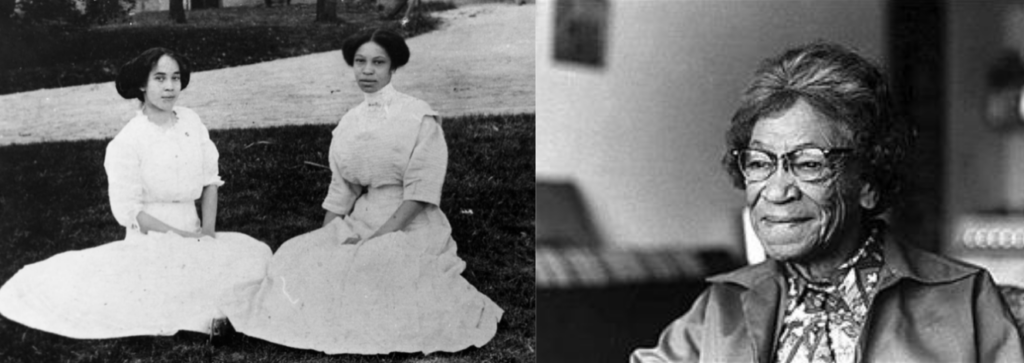
At left: Bertha Pitts Campbell (right) and Osceola Macarthy Adams, two of the co-founders of the Delta Sigma Theta sorority at Howard University; At right: Campbell in 1975. Photos courtesy of the Washington State Archives
Today, Bertha Pitts Campbell Place stands in the heart of Seattle’s Central District, a historically Black neighborhood where Campbell’s work reverberated for decades. The 100-unit building offers permanent homes and on-site health care and community.
Delta Sigma Theta’s Seattle chapter continues to volunteer at Plymouth, speaking to the continuity between Campbell’s legacy and our mission.
Sylvia Odom
Generations after Campbell began her activism, another woman’s leadership helped spark the founding of Plymouth Housing itself. Sylvia Odom, a member of Plymouth Congregational Church, chaired the task force that eventually launched Plymouth Housing Group in 1980. At a moment when homelessness in Seattle was rising, she pushed her congregation to move from concern to action.
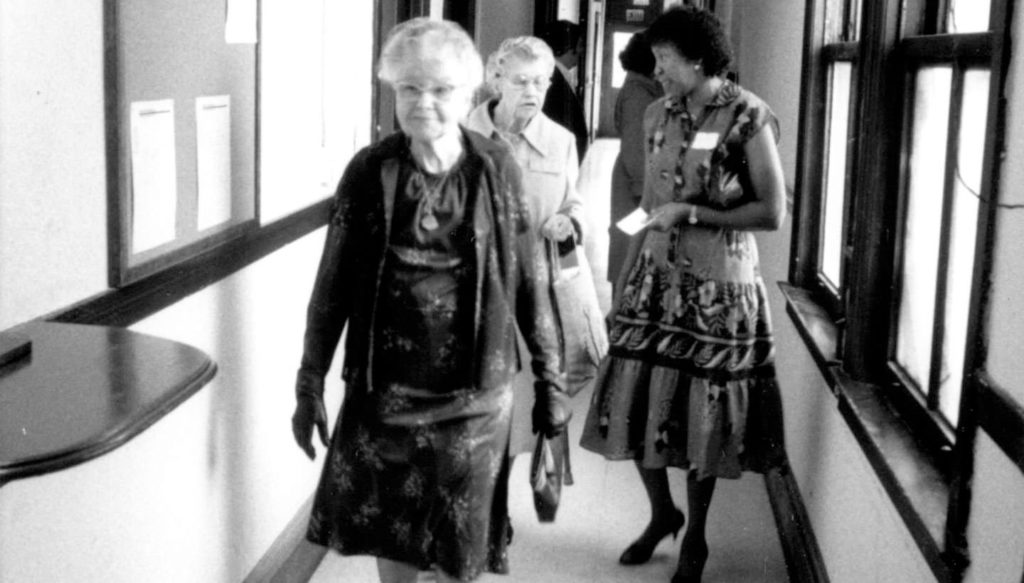
Sylvia Odom (right) gives a tour of Plymouth’s Lewiston building in 1983
What began as a church initiative soon became the independent nonprofit that is now one of the largest providers of permanent supportive housing in our region. Today, Sylvia Odom’s Place in Belltown has 65 studio apartments for people who are ready for greater independence in their journey.
Sheila Stanton
Most recently, Sheila Stanton advanced this work into the 21st century. In Kirkland, Stanton organized community meals and connected unhoused neighbors with resources. She also championed racial equity initiatives like the city’s first Juneteenth celebration and served on the Washington State Commission on African American Affairs.
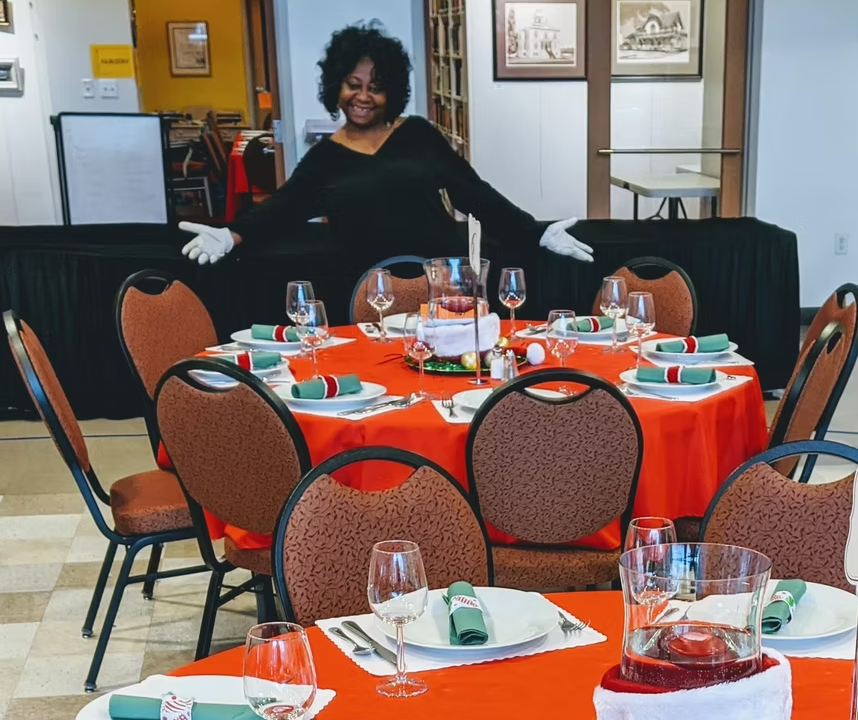
Stanton passed away in 2025. Her impact lives on through the hundreds of people she served, supported, and brought together with her characteristic warmth. Naming Plymouth’s newest Eastside building for her – Sheila Stanton Place in Kirkland – ensures that her spirit of hospitality and justice continues to shape the community she loved.
A shared legacy, carried forward
Bertha Pitts Campbell, Sylvia Odom, and Sheila Stanton remind us that permanent supportive housing is more than a model — it is an expression of shared values passed down over decades.
It’s fitting that these women’s names now anchor places of safety, healing, and new beginnings for hundreds of residents. As Plymouth continues to grow, we are grateful for the opportunity to honor their legacies in ways that continue to make a tangible difference for our neighbors.